
The right bolt can make a huge difference in keeping two pieces of an assembly securely attached, although this bolt is a small component. One of the aspects that can’t be ignored when using stainless steel fasteners is the thread design.
There are two types of bolts that are often considered: full-thread and half-thread bolts. Both products are intended for securing, but the way they are made might differ in their ability to fit in a joint and to function in service.
Understanding this difference makes it easier to select the right fastener instead of simply choosing a bolt based on its size or appearance.
What is a Full Thread Bolt?
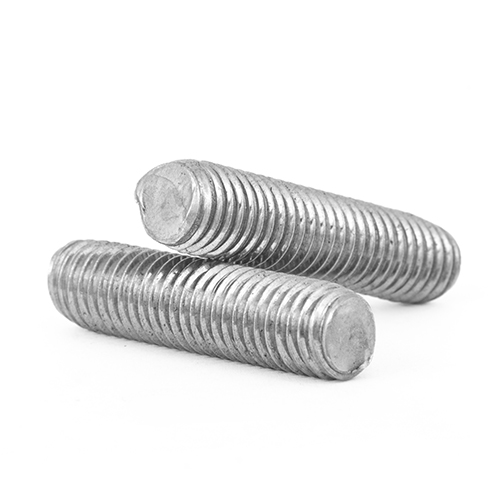
A full thread bolt has threads running along almost the entire usable length of its shank. This allows the nut to engage with the bolt over a larger portion of its length.
SS Full Thread Bolts can be useful when continuous thread engagement is preferred. They offer flexibility when joining components of different thicknesses and can be convenient where the position of the nut needs some adjustment during installation.
Since there is no long smooth section between the head and threaded portion, the bolt can provide thread engagement across most of the fastening length.
1. What Is a Half Thread Bolt?
A half-thread bolt has a threaded section at one end and a smooth portion below the head. The unthreaded section gives the bolt a solid shank that passes through the components being joined.
This design can be useful when a smooth section is required within the joint. The unthreaded portion can provide a close fit through the connected parts, while the threaded end provides space for the nut.
SS Half Thread Bolts are therefore considered when the joint design calls for a combination of a smooth shank and threaded section.
2. Which Thread Design Works Better?
There is no universal answer because the better choice depends on the joint being assembled.
A full-thread bolt may be preferable when greater thread engagement is needed or when the connected material is relatively thin. A half-thread design, on the other hand, may be a better fit when the smooth shank needs to pass through the joined components.
Other factors should also be considered, including bolt diameter, length, thread pitch, material grade and the amount of load the joint is expected to handle.
So, instead of asking which design is better overall, it makes more sense to ask which design matches the fastening requirement.
3. Stainless Steel for Long-Term Performance
We also manufactures products according to standards such as BIS, IS, BSW, DIN, ASTM and UNC. Its product range covers bolts, nuts, washers, machine screws, self-tapping screws, threaded rods, wires and other stainless steel fastening products.
4. What Should You Check Before Ordering?
Before selecting a bolt, it is worth checking more than just the thread type. Confirm the required diameter, overall length, thread specification, stainless steel grade and applicable standard.
The joint design should also be considered. A bolt that looks suitable on paper may not provide the required engagement or fit once it is installed.
For regular production requirements, it can also be helpful to work with a supplier that offers both standard and customised fastening solutions. Stainless Bolt Industries provides standard as well as customised stainless steel fasteners for different industrial requirements.
Conclusion
Choosing between full-thread and half-thread bolts is mainly about understanding how the fastener will work within the joint. Thread engagement, smooth shank length, material grade, dimensions and operating conditions all have a role to play. With experience in stainless steel fasteners and a broad product range, Stainless Bolt Industries Pvt. Ltd. can support businesses looking for reliable fastening solutions. Contact us to discuss your stainless steel bolt requirements and find a suitable option for your project.
Frequently Asked Questions (FAQ)
A full-thread bolt has threads extending along most or all of its usable shank length.
A half-thread bolt has a threaded section along with a smooth, unthreaded portion.
Yes. Stainless steel provides good resistance to corrosion and is suitable for many outdoor environments.
Grades such as 304, 316, 304L and 316L are commonly selected depending on the required performance.
Consider the joint design, required thread engagement, bolt dimensions, load and operating environment before selecting the bolt.