
Even for the smallest part in an assembly, reliability in the connections can be affected. Washers have a significant role in holding bolted joints tight particularly when subject to frequent movement and vibration as in equipment. Star washers are designed with teeth that help create a gripping contact between connected surfaces.
However, selection between the two types will depend upon the fastener assembly, space available, and application requirements. This information is vital for enabling buyers to choose the appropriate washer for their industrial use.
What Is a Star Washer?
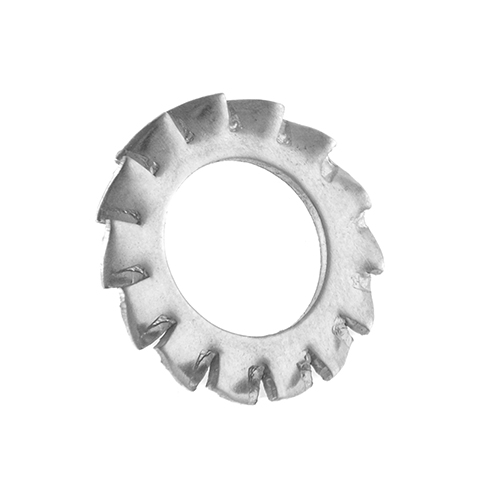
The star washer is an engineered washer that features small teeth on either the internal or external diameter. When tightened it creates contact with the mating surfaces. Depending on how the assembly has been designed they can help to prevent relative movement and aid electrical contact.
An Internal External Star Washerwill be chosen based on the size of the fastener, the space available to install, the surface and application. The two designs have different uses and knowing what they are made of will help you to decide which one to buy.
Internal Star Washers: Features and Applications
Internal toothed star washers are those in which the teeth are attached to the inner circumference of the star washers. Outer circumference of these star washers is relatively smooth, making them ideal for use in places where there is lack of clearance around the star washers.
Some of the applications include:
• Electric control panels and machinery
•Electronic assemblies and instruments.
•Compact mechanical fastening arrangements.
•Sheet metal connections.
•Selected industrial equipment installations.
Before selecting this type, ensure you consider the bolt size, washer sizes, material and conditions of contact. The inside teeth have to correspond with the assembly they will be used in.
External Star Washers: Features and Applications
It is known as an external star washer because the teeth are on the outside. When installed properly, the larger toothed perimeter can offer multiple contact points to the mating surface.
Such washers can be used in specific electrical connections, sheet-metal assemblies and mechanical equipment. They are suitable depending on the available area, the finish of the surface, the design of the joint and the operating conditions.
Marks can be made on softer or finished surfaces by external teeth. So, buyers should take into account the appearance and protection requirements of the material to be mated before choosing this design.
Key Differences Between Internal and External Star Washers
- Tooth Location: Internal washers have teeth around the inside of the opening, while external washers have teeth around the outside perimeter.
- Space Requirements: Internal designs are suitable for assemblies where a compact outer edge is required. They need proper clearance around the toothed edge.
- Surface Contact: Both designs require proper contact between the teeth and mating surfaces, depending on the materials and assembly requirements.
- Electrical Applications: In approved designs, star washers can provide electrical bonding, provided they meet the relevant electrical and safety requirements.
- Joint Suitability: These washers may not be suitable for every type of joint. Select the appropriate design based on joint requirements and operating conditions.
Factors to Consider Before Buying
First, check the size of the fastener and size of the washers. A loose fit of a washer may result in the washer not providing the intended contact.
Then, choose material grade based on corrosion exposure, and compatibility with the surrounding parts. In many applications, stainless steel washers might be helpful, but the choice of material should be based on the actual application.
Also take into account vibrations, surface hardness, clearances, electrical conductivity requirements, and assembly directions. When there is safety involved with the connection, use the fastener described rather than using washers instead without prior consent.
Choosing a Reliable Manufacturer
Industrial buyers should confirm dimensions, material specifications, product availability, and relevant quality documentation before placing an order. An experienced SS Manufacturer in India can help to clarify product options and sourcing requirements.
Stainless Bolt Industries Pvt. Ltd. offers stainless steel fastening solutions and a variety of different options for fasteners such as washers. When customers are ordering an Internal External Star Washer, they should provide the necessary size, grade, quantity and application to allow the specification to be verified prior to ordering.
Conclusion
The main difference between the internal and external washers is the type of washers teeth and the space around the fastener. The type of joint, compatibility of materials, surface finish and the desired mechanical or electrical characteristic is the key to the choice of right type. When selecting washer, be careful to make sure it could fit the assembly, not only by appearance.
Talk to Stainless Bolt Industries Pvt. Ltd. and get some clarification on the specifications which are appropriate for your industrial application with regards to washers.
Frequently Asked Questions (FAQ)
External washers are those that have teeth along the outer perimeter, and internal washers are those that have teeth along the inside perimeter.
No. Effectiveness varies based on joint design and operating conditions, and are not appropriate for all applications.
Verify the washer size, grade of material, mating surfaces, space, and assembly needs.