
Choosing the right fastening hardware may seem like a small detail, but it makes a big difference. Specifically, the properties of metal screws and nuts must meet the required operating conditions. One of the most reliable options is stainless steel, which has various grades with different characteristics.
Two common variants are A2 and A4 stainless steel, which are used in construction and industrial equipment. However, their areas of application are different, and therefore attention must be paid to the conditions of use when choosing. Thus, the use of A2 and A4 Stainless Steel hardware requires knowledge of the site’s specifics and the loads that the product will be exposed to.
Understand the Difference Between A2 and A4 Stainless Steel
For project buyers, A2 and A4 Stainless Steel are familiar grade choices, but the right one depends on exposure and performance needs.
A2 stainless steel is usually referred to as 304 grade because it has good corrosion resistance. It is applicable for indoor equipment, general construction, furniture, and machines operating in normal conditions. It is an optimal choice for screws and nuts that can be exposed to occasional wetting or humid environments but not to severe chlorinated or corrosive conditions.

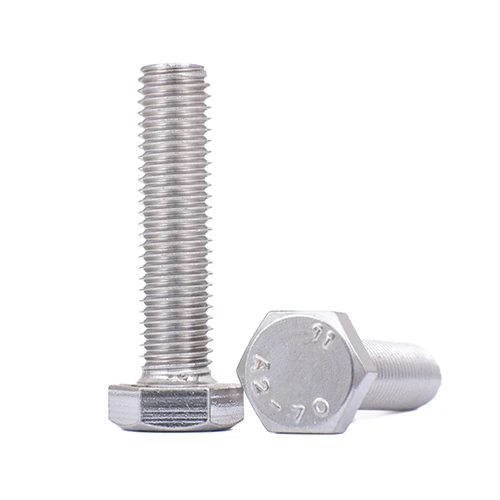

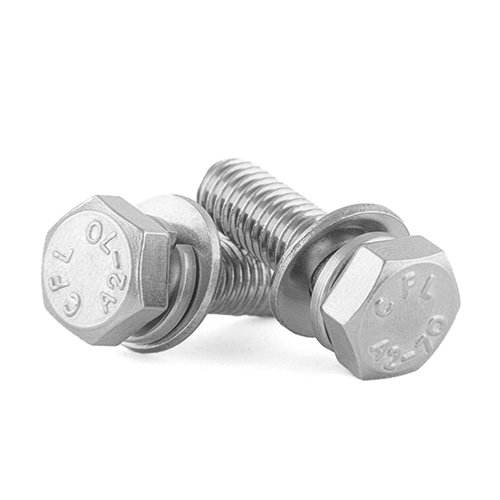
The other name of A4 Stainless Steel is 316 Stainless steel, whose alloy has more molybdenum content than that of A2 Stainless Steel; therefore, it has higher resistance to chloride pitting and crevice corrosion. It can be used in coastal and corrosive environments as well as marine applications. However, it should also be noted that no stainless steel can be completely corrosion-proof, and the surrounding conditions determine the choice of metal.
1. Check the Working Environment
For indoor machinery, building interiors and a lot of general commercial purposes, A2 may exhibit sufficient performance. For coastal areas, swimming pools or any places subjected to chlorides and specific chemicals, A4 stainless steel fasteners will be a more reliable option.
Moisture, cleaning agents, deposits, and inadequate air flow may influence the rate of corrosion. In case the environment is harsh or unpredictable, seek the advice of an engineer or material expert.
2. Match the Grade to the Application
The A2 grade fasteners can be used in construction works, household appliances, electrical items, and machineries. On the other hand, A4 grade fasteners should be used in manufacturing marine fittings, chemical machinery, or structures which are going to be constructed outdoors and are exposed to chlorides.
Bolts, nuts, screws, washers, bolts, and studs have to suit the joint as well as the loading conditions. Therefore, select the right dimensions, threading, strength, and specifications rather than material grades only.
3. Consider Budget and Long-Term Value
A2 Screws are generally more economic than A4 Screws. For a less aggressive environment, there is no point in choosing A4 Screws because of their higher price. However, in a chloride-exposed and highly corrosive environment, higher grade stainless steel fasteners may provide a more reliable solution.
A proper choice of stainless steel material grade, according to the working environment and service requirement, will reduce maintenance and replacement costs.
4. Verify Quality and Specifications
Make sure that the supplier can properly explain the material grade, size, standard, marking and other relevant information. Double-check marking and certificates if necessary. Remember that not all stainless steel fasteners are the same and a wrong grade choice in a critical joint may result in expensive failures.
Stainless Bolt Industries Pvt. Ltd. can provide a wide range of machine bolt, nut, screws, washer, threaded products made of A2/304 and A4/316 stainless steel. When considering A2 and A4 Stainless Steel options, it is important to match the application requirements. We welcome all inquiries about Stainless Steel products and are ready to help you select the appropriate solution for your application.
Conclusion
Generally, the A2 vs A4 stainless steel choice depends on the working environment, application, technical requirements and budget. A2 Screws are widely applied in a lot of common construction. A4 Screws are more appropriate for chloride-exposed applications. The technical specification should be checked always and expert advice taken where a failure would have an effect on safety or operation. Choosing the correct grade from the beginning could help form good joints and reduce unnecessary maintenance.
Frequently Asked Questions (FAQ)
Depending on the application requirements, both stainless steel grades may exhibit excellent performance. A2 is more appropriate for general applications while A4 is more resistant to chloride corrosion.
Stainless steel is highly corrosion-resistant, but it is still prone to staining and corrosion caused by chlorides, aggressive chemicals or improper maintenance.
Yes, A4 stainless steel is generally more expensive than A2 stainless steel.